




Couleurs des bougies de l'Avent dans des présentoirs sans flamme
-
 auteur
 - 27th août 2026

Les illuminations de l'Avent s'articulent autour d'un récit visuel simple : la lumière évolue à l'approche de Noël. Pour un distributeur, un fournisseur d'église ou une équipe d'accueil, la difficulté réside dans la continuité de ce récit lorsqu'une flamme nue est proscrite. Un agencement sans flamme adapté préserve le rythme des couleurs, offre au personnel un contrôle précis et laisse place aux pratiques religieuses locales, sans imposer un modèle unique.
Pourquoi les couleurs de l'Avent ont-elles une signification ?
Les couleurs des bougies de l'Avent transforment quatre semaines d'illumination en une succession d'attente, de recueillement, de joie et d'arrivée. De nombreuses communautés chrétiennes occidentales utilisent trois bougies violettes et une bougie rose, puis ajoutent une bougie blanche en forme de Christ pour la veille de Noël ou le jour de Noël. D'autres églises utilisent le bleu, le blanc ou un ordre différent ; ainsi, une décoration réfléchie s'inspire des traditions liturgiques de chaque communauté.
Cette variation est importante lorsqu'une gamme saisonnière est proposée sur plusieurs marchés. Une bougie violette peut évoquer la pénitence ou la préparation dans un contexte, tandis que le bleu peut être la couleur traditionnelle de l'Avent dans un autre. La question commerciale pertinente n'est pas de savoir quelle couleur est appropriée, mais plutôt si la gamme correspond au calendrier de l'Avent du client et assure une transition visuellement claire.
La troisième semaine marque un tournant visuel.
La bougie rose apparaît généralement le troisième dimanche du mois, souvent appelé dimanche de Gaudete, lorsque l'atmosphère se fait plus joyeuse. Dans un ensemble sans flamme, ce changement doit être facilement perceptible sans donner l'impression d'une gamme de produits distincte. L'harmonie de la hauteur, de l'effet de flamme et de la finition permet à la couleur d'accent de véhiculer cette signification.
La bougie centrale complète la séquence
La bougie blanche en forme de Christ est traditionnellement allumée après les quatre bougies de l'Avent, symbolisant le Christ, la lumière et l'accomplissement. Une bougie centrale plus haute ou un support surélevé permettent de distinguer clairement l'allumage final, même de loin. La symbolique demeure intacte, même lorsque la source lumineuse est une LED plutôt qu'une mèche.

Comment un set sans flamme maintient le rythme hebdomadaire
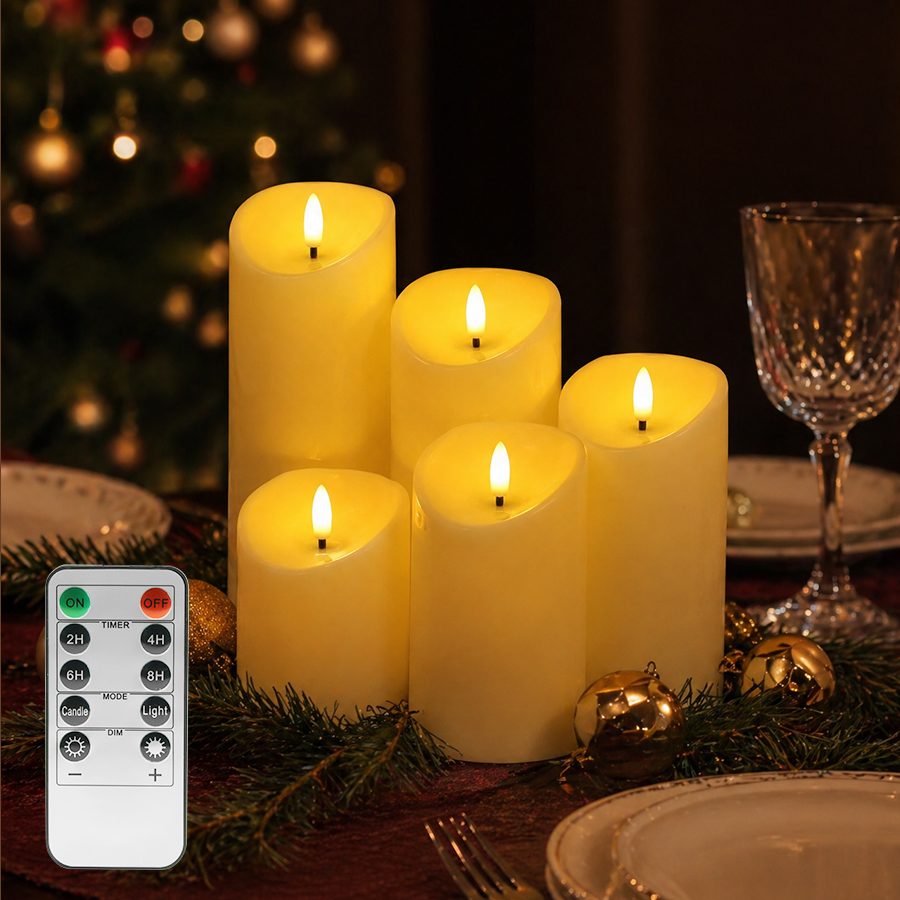
Un bon ensemble de bougies permet de traduire le symbolisme des couleurs en une utilisation simple. Quatre bougies peuvent être allumées simultanément pour une cérémonie, ou une nouvelle bougie peut être ajoutée chaque semaine. Les bougies LED avec télécommande sont pratiques car elles permettent au personnel de modifier l'éclairage sans avoir à se contorsionner à travers le feuillage d'une couronne ou à déplacer une composition fragile.
| Élément d'affichage | Lecture de couleur courante | point de planification sans flamme |
| Semaines 1, 2 et 4 | Le violet ou le bleu peuvent symboliser l'attente, la réflexion ou l'espoir. | Veillez à conserver une teinte uniforme pour les première, deuxième et quatrième lumières ; confirmez les usages de la congrégation avant la production. |
| Troisième dimanche | La rose, ou le rose pâle, symbolise souvent la joie au milieu de l'Avent. | Utilisez une seule bougie d'accentuation distincte pour que le changement soit visible sans que l'ensemble paraisse incohérent. |
| Veille ou jour de Noël | Une bougie blanche en forme de Christ peut représenter le Christ, la lumière ou l'accomplissement. | Placez-le au centre ou surélevez-le légèrement pour que l'éclairage final soit bien visible. |
| régime alternatif | Certaines églises utilisent du bleu, du blanc ou un autre motif local. | Considérez la demande de couleur comme un cahier des charges du client, et non comme une spécification universelle. |
La forme doit soutenir le rituel
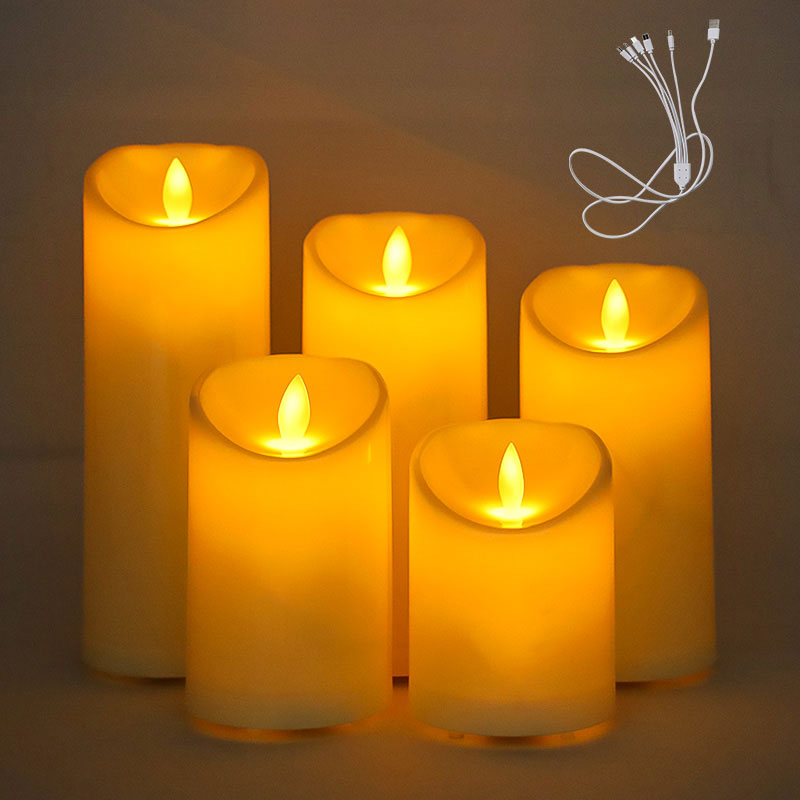
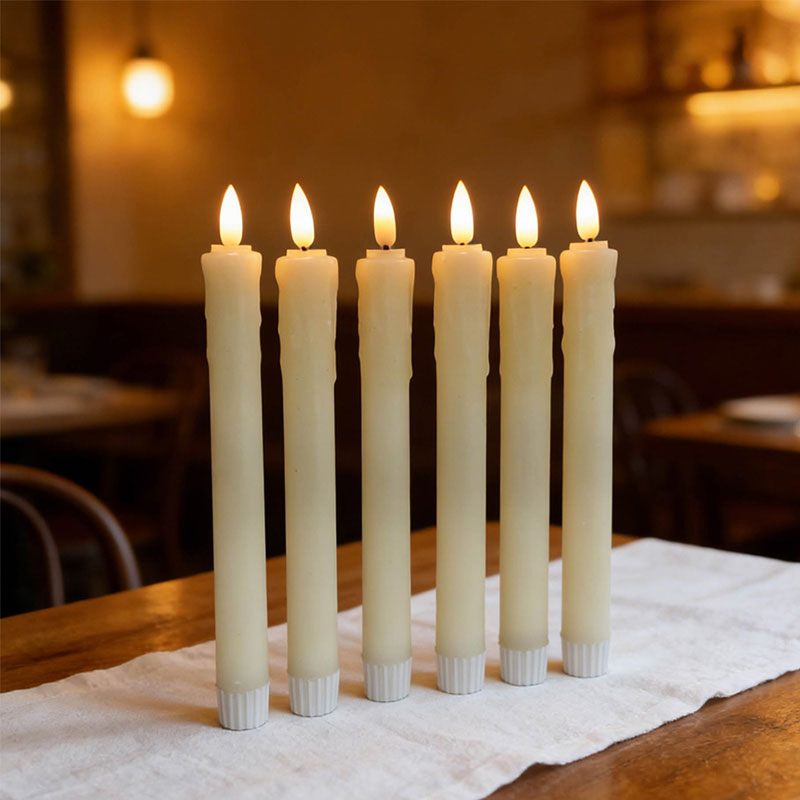
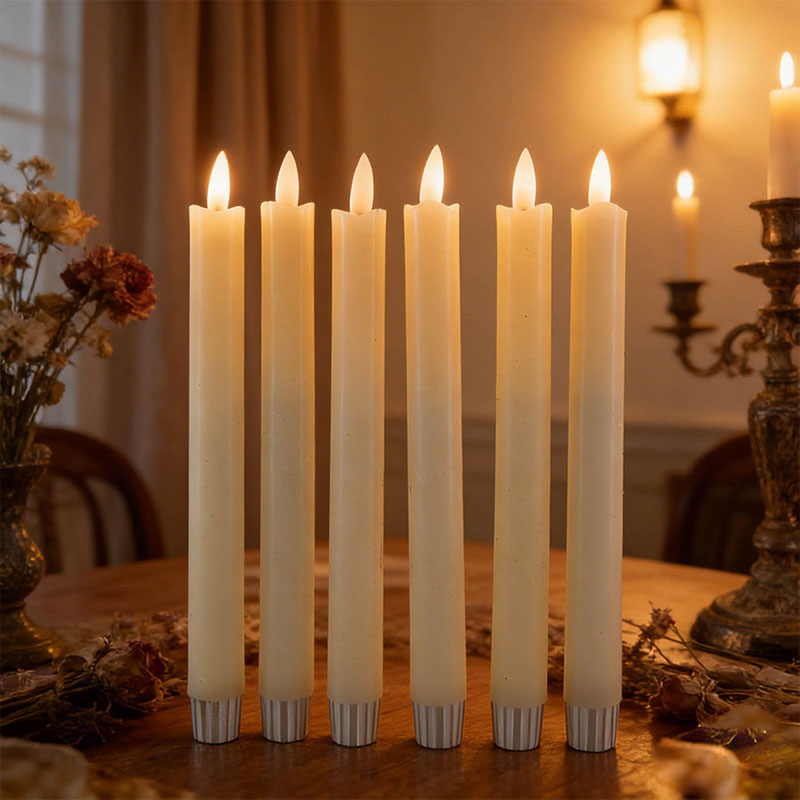
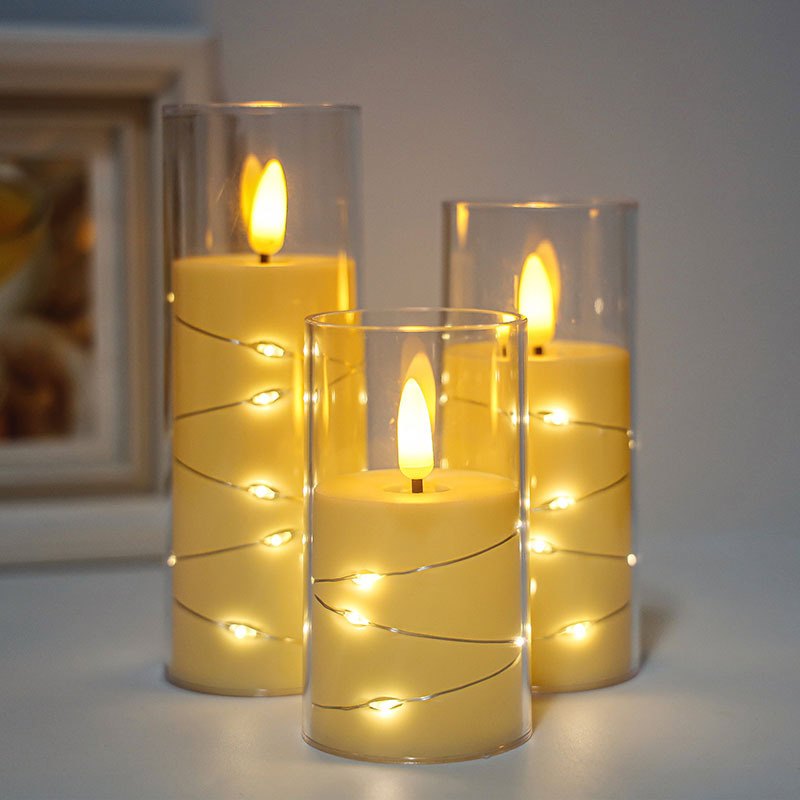
Mince bougies coniques sans flamme télécommandées Ces bougies peuvent être intégrées à une couronne traditionnelle, à condition de vérifier au préalable le diamètre du support. Les bougies piliers conviennent à une cheminée, une table de prière ou une grande fenêtre, tandis que les bougies sous verre permettent de délimiter la lumière. Il s'agit de styles différents ; il est donc conseillé d'apprécier l'ensemble de la composition plutôt que de se fier à une seule bougie.
Le contrôle devrait soutenir le personnel
Pour les affichages groupés, Bougies LED coniques avec télécommande Réduisez les allumages et extinctions manuels. Une minuterie peut programmer un allumage quotidien, mais la durée exacte dépend du modèle. Vérifiez si la commande modifie la luminosité, le mode de flamme ou seulement l'état marche/arrêt, et testez la visibilité lorsque les bougies sont placées derrière de la verdure ou une vitre.
Le même test pratique s'applique à bougies coniques avec télécommandeAllumez toutes les bougies, placez la télécommande à l'endroit utilisé par le personnel et vérifiez la réactivité du groupe. Si l'installation est destinée à un office, confirmez la procédure de réinitialisation avant le premier dimanche. Une utilisation sereine permet de se concentrer sur le rituel plutôt que sur le dépannage.

Un cahier des charges pratique pour les gammes saisonnières en gros
Un bref descriptif écrit permet d'éviter toute confusion quant au symbolisme des couleurs lors de la sélection des échantillons. Il doit préciser le type de lieu ou de marché, le nombre de bougies hebdomadaires, la position de la bougie centrale et le programme d'éclairage prévu. Il doit également indiquer si le client souhaite un effet de flamme blanc chaud uniforme ou une autre couleur de lumière.
- Confirmer l'ordre des couleurs locales : violet, bleu, rose, blanc ou tout autre motif établi.
- Mesurez l'espace de la couronne, du support, de l'étagère ou de l'autel avant d'approuver les dimensions du cône ou du pilier.
- Déterminez si le changement hebdomadaire est manuel, télécommandé, programmé ou une combinaison de ces éléments.
- Vérifiez l'accès à la batterie, la portée de la commande et les étapes de réinitialisation dans la configuration finale.
- Approuver l'échantillon physique de couleur et de surface sous l'éclairage réel du lieu.
Mayone Candle est une solution pertinente pour les acheteurs ayant besoin de bougies électroniques sans flamme et sans fumée pour des décorations saisonnières récurrentes. La gamme comprend des bougies piliers, coniques, sous verre et des guirlandes lumineuses ; la télécommande est généralement disponible en option. Pour un projet OEM, la couleur ou le traitement imprimé sont généralement développés à partir d'un modèle existant. L'échantillon final doit donc confirmer la teinte, la finition et les commandes exactes avant une production en série.
L'essentiel à retenir pour les décorations de l'Avent
Les décorations de l'Avent aux couleurs harmonieuses sont plus réussies lorsque leur disposition suit le calendrier liturgique, plutôt que d'uniformiser les couleurs pour tous les marchés. Respectez les traditions de vos clients, mettez en valeur la bougie centrale et la bougie d'accent de la troisième semaine, et testez les commandes en situation réelle. Ainsi, la lumière des bougies sans flamme préservera la progression paisible de l'Avent tout en simplifiant la gestion quotidienne pour les personnes en charge de ces décorations.
FAQ
Peut-on utiliser des bougies sans flamme dans une couronne de l'Avent ?
Oui, à condition que le corps de la bougie s'adapte au support et que l'ensemble soit stable. Les bougies sans flamme évitent les flammes nues et la fumée, mais il faut tout de même veiller à les placer avec soin, à conserver des morceaux de cire intacts et à les protéger de la chaleur ou d'une exposition prolongée au soleil.
Les batteries–Bougies coniques à commande à distance, adaptées aux décorations d'église ?
Ces lampes peuvent convenir si leurs dimensions, leur portée, l'accès à leurs piles et leur mode d'emploi correspondent aux exigences du lieu. Testez la composition florale ou l'autel dans son intégralité, en veillant à bien couvrir les éléments végétaux et les objets en verre susceptibles de bloquer le signal de la télécommande.
Les quatre bougies de l'Avent doivent-elles avoir la même température de couleur ?
Un effet de flamme blanc chaud uniforme facilite généralement la perception des couleurs. Si un client demande un éclairage coloré, il est conseillé de lui soumettre un échantillon physique, car le rendu visuel dépend de la couleur du boîtier, de la finition de surface et de l'éclairage ambiant.