




Halloween Candle Traditions from Samhain to LED Light
-
 author
- 17th September 2026
A glowing pumpkin still makes an October doorway feel different. For event stylists and seasonal display teams, that familiar image raises a useful question: what part of Halloween candlelight is actually traditional? The answer runs through seasonal fires, frightening lanterns, and changing celebrations.
Understanding those layers makes it easier to create a display with a story, while deciding where modern LED light belongs.
The seasonal darkness behind the glow
Samhain provides an important starting point for Halloween’s history. The Gaelic festival marked the seasonal passage toward winter, and fire featured in its observance. Beliefs about supernatural encounters gave the darkening season an unsettling character. That context helps explain the enduring appeal of a small, visible light surrounded by darkness.
Modern Halloween also carries Christian influences. Its name comes from All Hallows’ Eve, the evening before All Saints’ Day. Treating the holiday as a blend of traditions gives a more accurate explanation than presenting every modern decoration as an unchanged ancient Celtic practice.
Fire and candlelight have different histories
A communal bonfire and a candle inside a carved vegetable are different traditions. They belong in the same wider story of autumn light, but one does not prove the age of the other.
For a themed event, keep that distinction clear: a glowing lantern can evoke Halloween’s past without being described as a reconstruction of an ancient ceremony.
Folklore adds meaning to the lantern
The story of Jack gives the lantern a memorable character. In a familiar version, Jack is refused entry to both heaven and hell and wanders with a light. This is folklore, with variations in the telling, rather than a documented account of the first Halloween lantern.
Its value for an October display is the image of a solitary glow on a strange night.
How a carved turnip became a pumpkin
Irish Halloween lanterns were made from turnips before the pumpkin became the familiar American form. Candles placed inside the carved faces helped people frighten their neighbours. The change of vegetable matters because it shows that a recognisable custom can survive a change in materials.
Pumpkin lanterns carried that visual idea into a different setting. A face cut into a hollow shell becomes animated when light shines through its eyes and mouth. For a display team, that relationship between enclosure and light is more useful than claiming a precise ancient meaning for every carved expression.
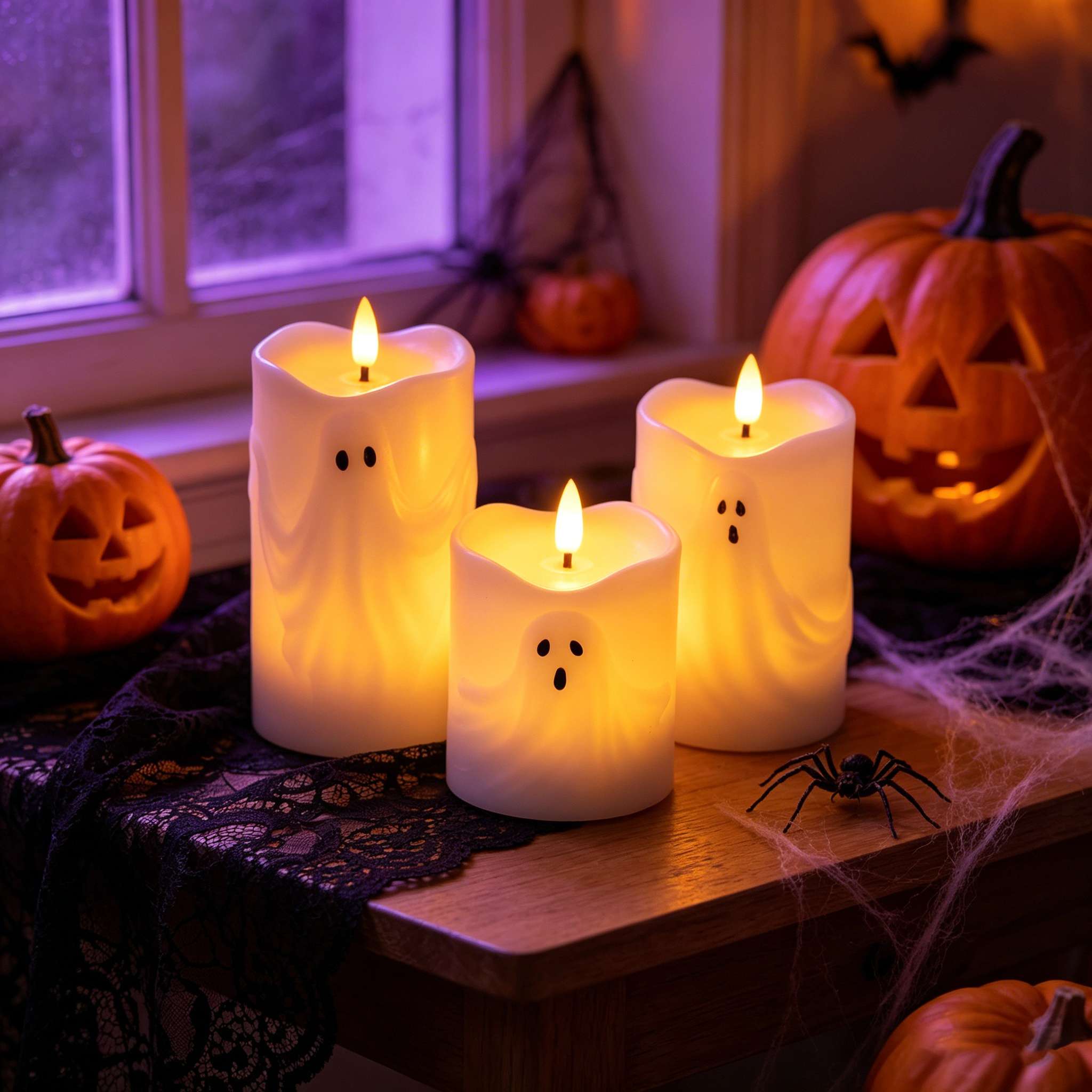
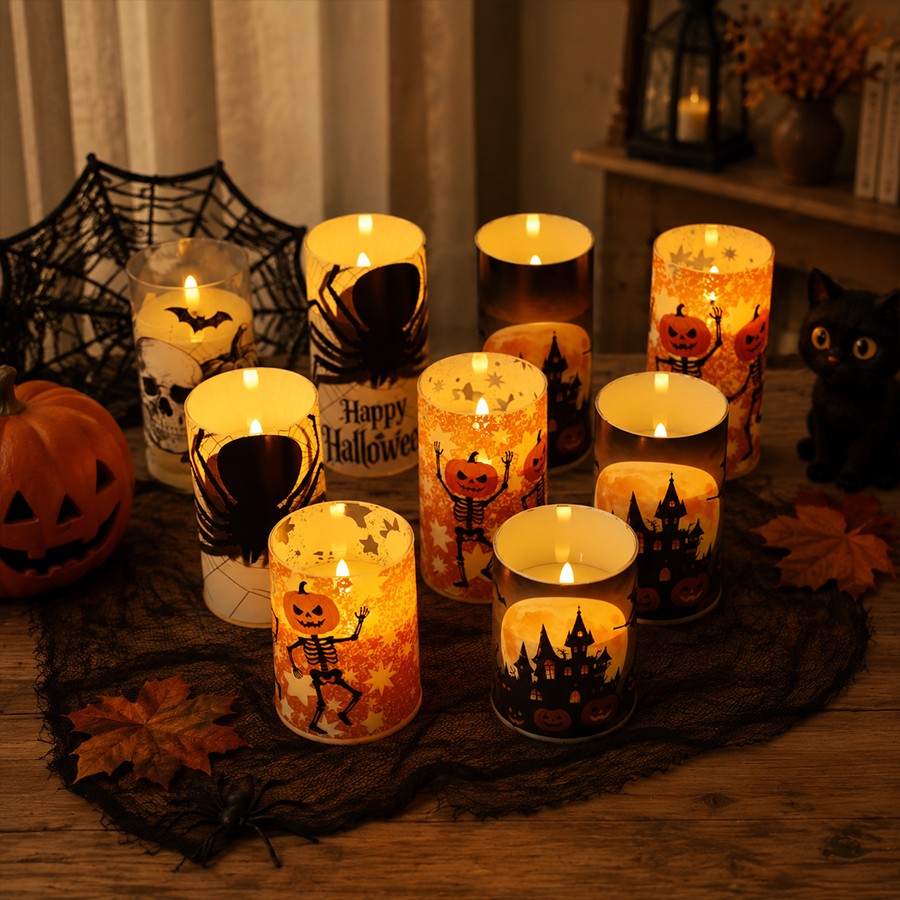
A modern arrangement can acknowledge the story through a few clear details. Pair a carved pumpkin prop with a short explanation of the earlier turnip lantern, then let the illuminated face carry the scene. Surrounding it with halloween pillar candles can extend the glow, provided the lantern remains the focal point.
What changes when the light becomes electronic
LED light changes the source of illumination while keeping the candle-shaped visual reference. In a secular Halloween display, a flickering point of light can still suggest a haunted window or an old lantern. It should be presented as a modern interpretation, with no claim that electrical light formed part of the historical custom.
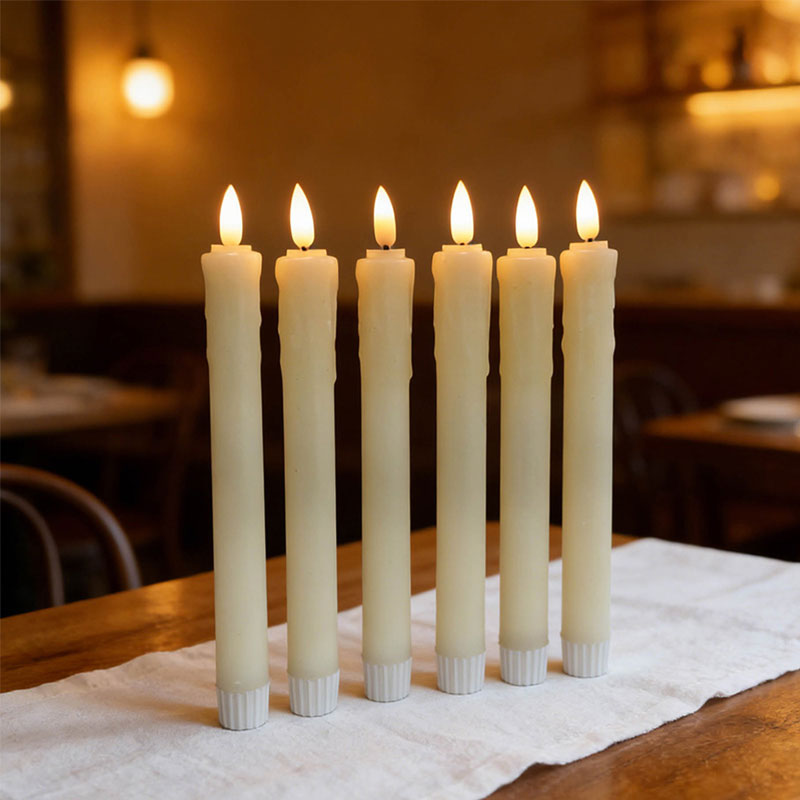
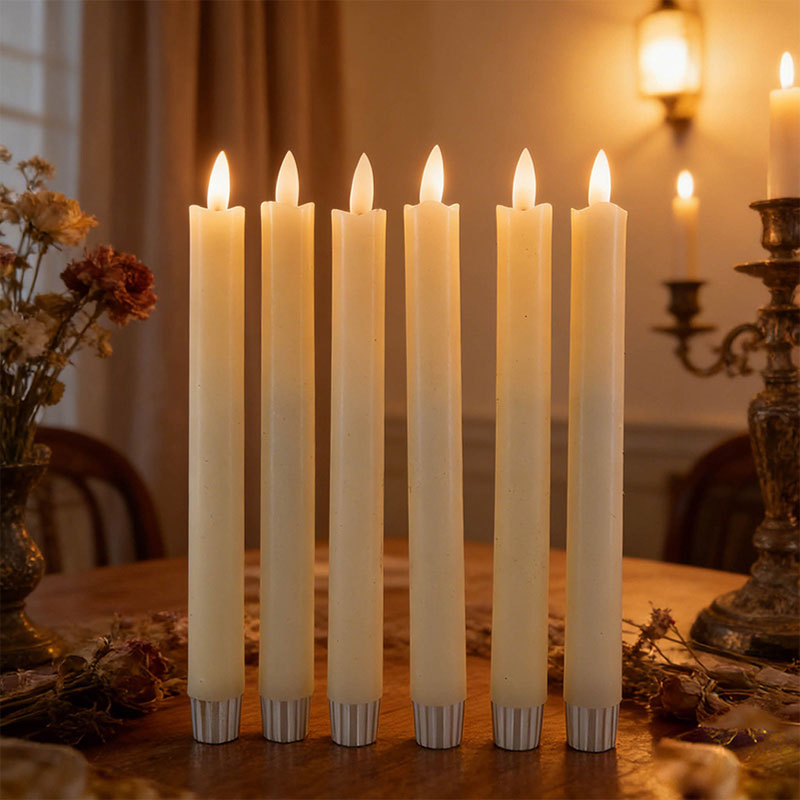
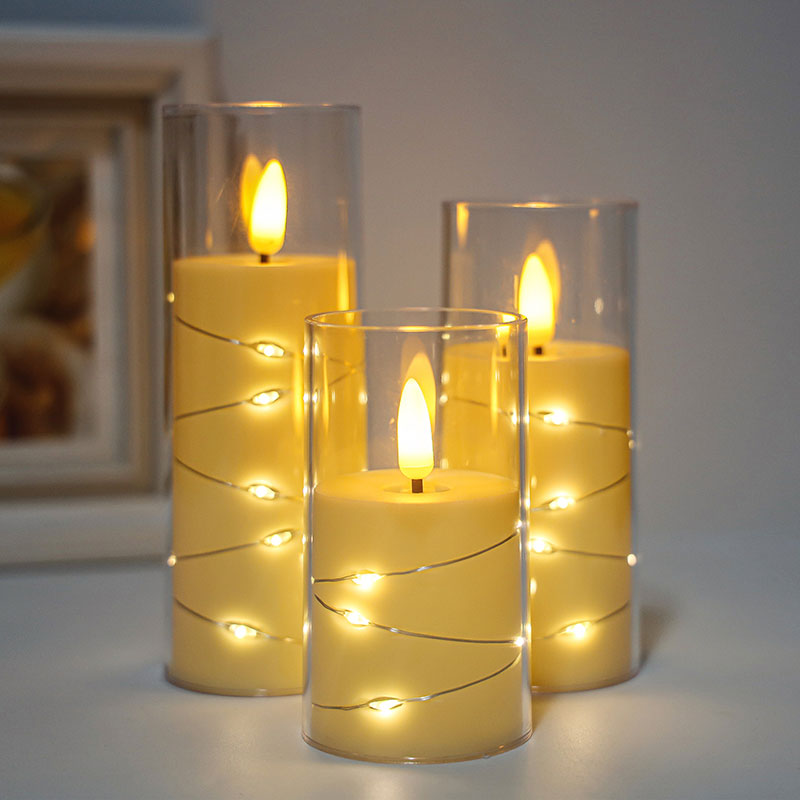
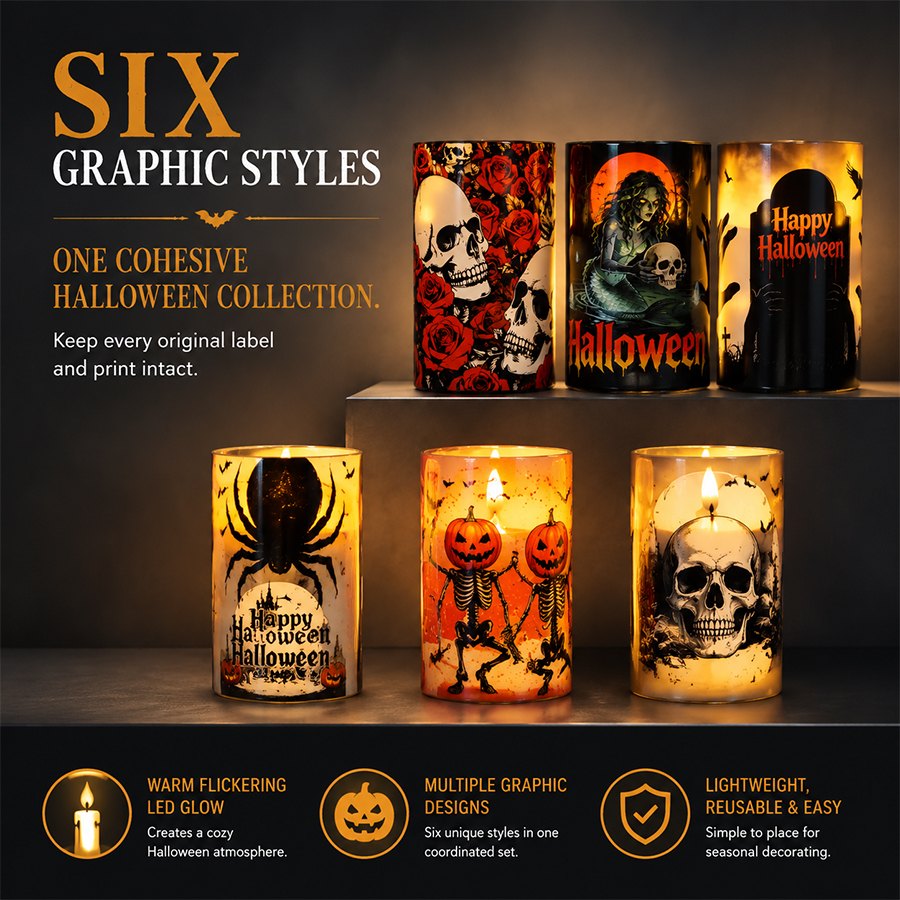
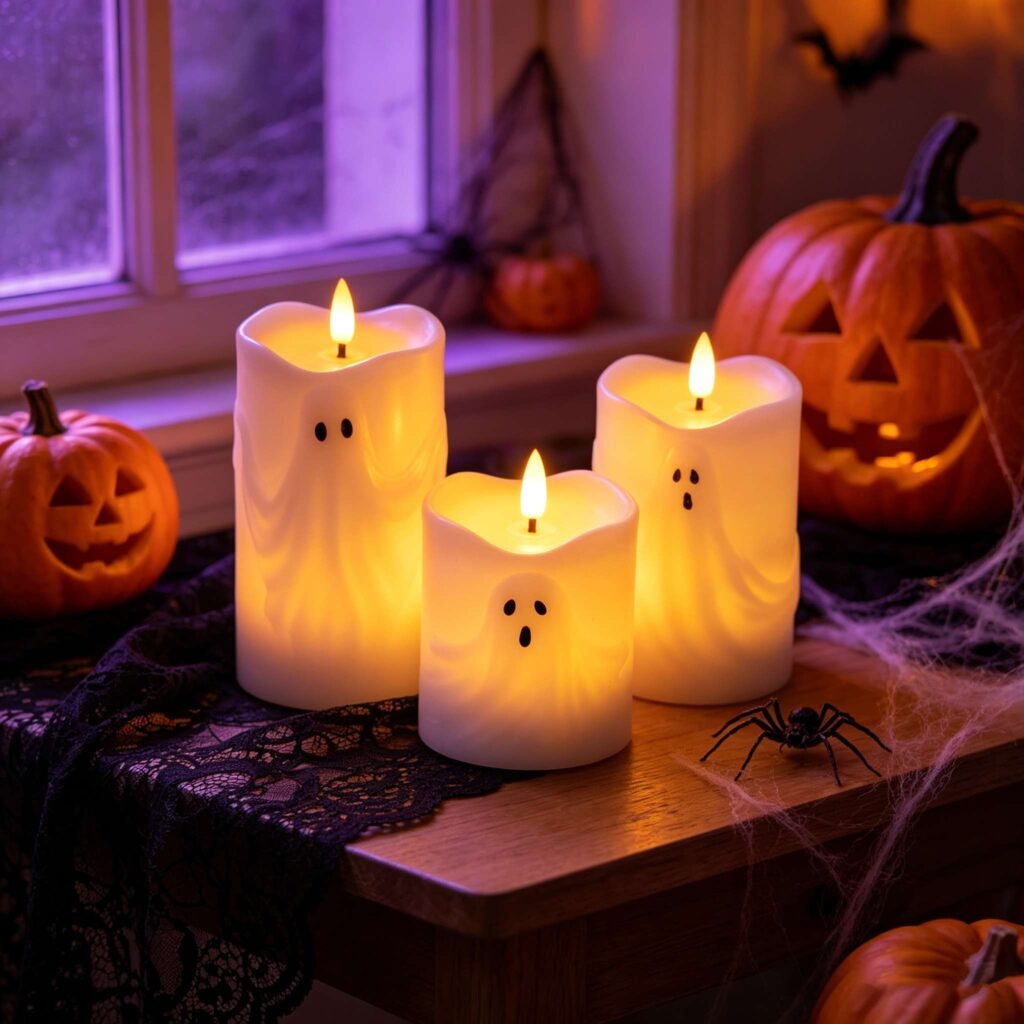
That distinction is especially useful when a venue wants candlelike movement without burning a wick. Mayone Candle’s halloween flameless pillar candles use polypropylene bodies and a flickering light effect. Their role here is straightforward: they provide the visible glow for a contemporary scene without producing candle smoke or dripping burning wax.
The practical change also fits established Halloween fire-safety advice. Battery-operated lights are recommended for jack-o’-lanterns in place of burning candles. For an event installation, keep the wider setting sensible too: secure the props, leave walking routes clear, and keep batteries and delicate components away from children.
| Display element | Earlier or traditional form | Modern interpretation |
| Seasonal fire | Bonfire associated with Samhain | An explanatory reference to autumn fire |
| Frightening lantern | Candle inside a carved turnip | Illuminated pumpkin or turnip prop |
| Visible candle glow | Burning wick | Flickering electronic light |
These connections are interpretive choices, rather than a single uninterrupted timeline. A designer can borrow the lantern motif without combining every historical layer in one scene. That restraint makes the story easier for visitors to understand.
A Halloween display with a clear story
A simple lantern story gives seasonal teams a useful organising idea. Imagine an indoor entrance display built around a traveller’s light: one carved face, a dark backdrop, and a small supporting candle group. Flameless candle light supplies the atmosphere, while a brief label explains the turnip connection.
The supporting details should reinforce that idea. Halloween battery operated candles suit the contemporary interpretation, but their presence need not turn the display into a technology demonstration. Keep controls out of the visual story and let the glowing face do most of the work.
- Use one short historical explanation beside the main lantern.
- Keep modern ghosts or printed motifs clearly playful.
- Leave enough space around the display for visitors to pause.
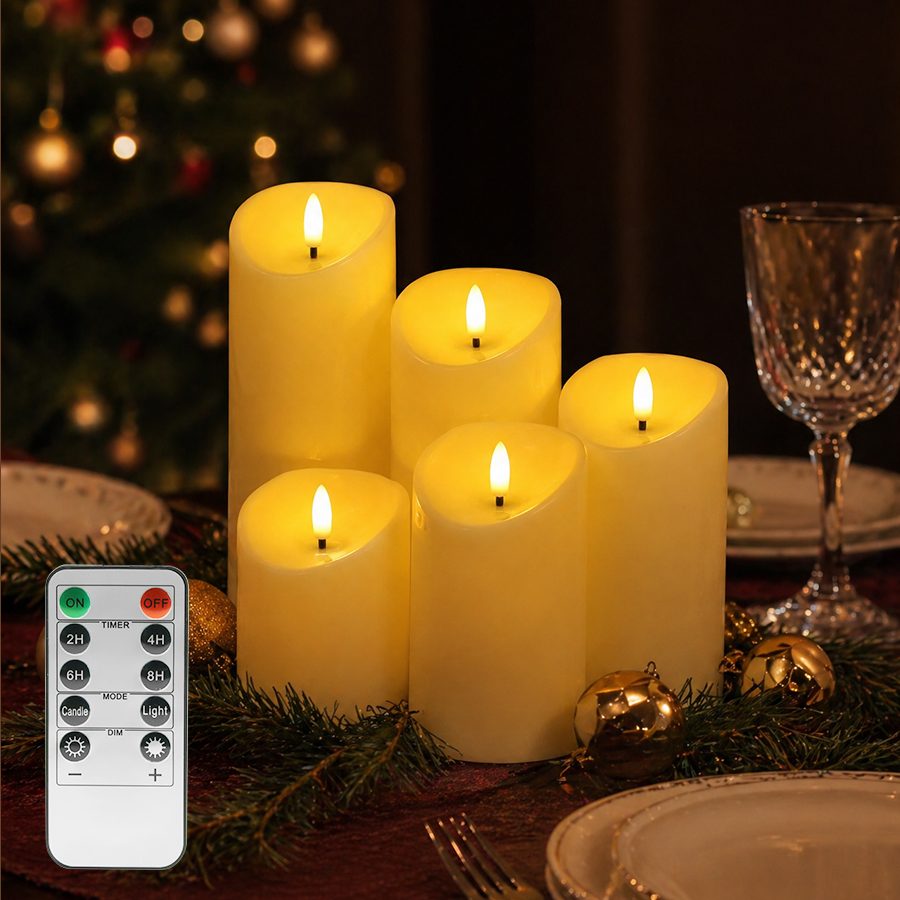
Operating convenience can stay behind the scenes. For compatible LED candles with remote control, staff can activate the arrangement without repeatedly reaching into it. Test the response in the completed setting, because the display should remain easy to manage once its decorative pieces are in place.
Keeping the tradition recognisable
Halloween candlelight makes most sense as an evolving visual tradition. Seasonal fire, lantern folklore, and the pumpkin’s glowing face each contribute something different. For the next display, choose the story first and use LED Halloween candles to express it. A clear connection to that story matters more than surrounding every surface with light.
FAQ
Did Samhain celebrations use today’s pumpkin lanterns?
Today’s pumpkin jack-o’-lantern should not be presented as an ancient Samhain object. Seasonal fires and later carved lantern customs belong to different layers of Halloween history, even though both involve light in autumn darkness.
Why were turnips used for Halloween lanterns?
Turnips were carved into frightening faces in Irish Halloween custom and lit from within. The pumpkin became the familiar American adaptation. The recognisable feature is the illuminated face, even when the surrounding material changes.
Does a Halloween display need a real flame?
A secular decorative display can use an electronic light to preserve the lantern effect. It is a contemporary choice, not a claim about historical practice or a replacement rule for anyone’s personal religious observance.
How much history belongs in a seasonal display?
One accurate connection is usually enough for a compact installation. Explain the turnip lantern, for example, and let the lighting illustrate it. Additional legends work better in a separate event talk than on a crowded display label.